
Hi,
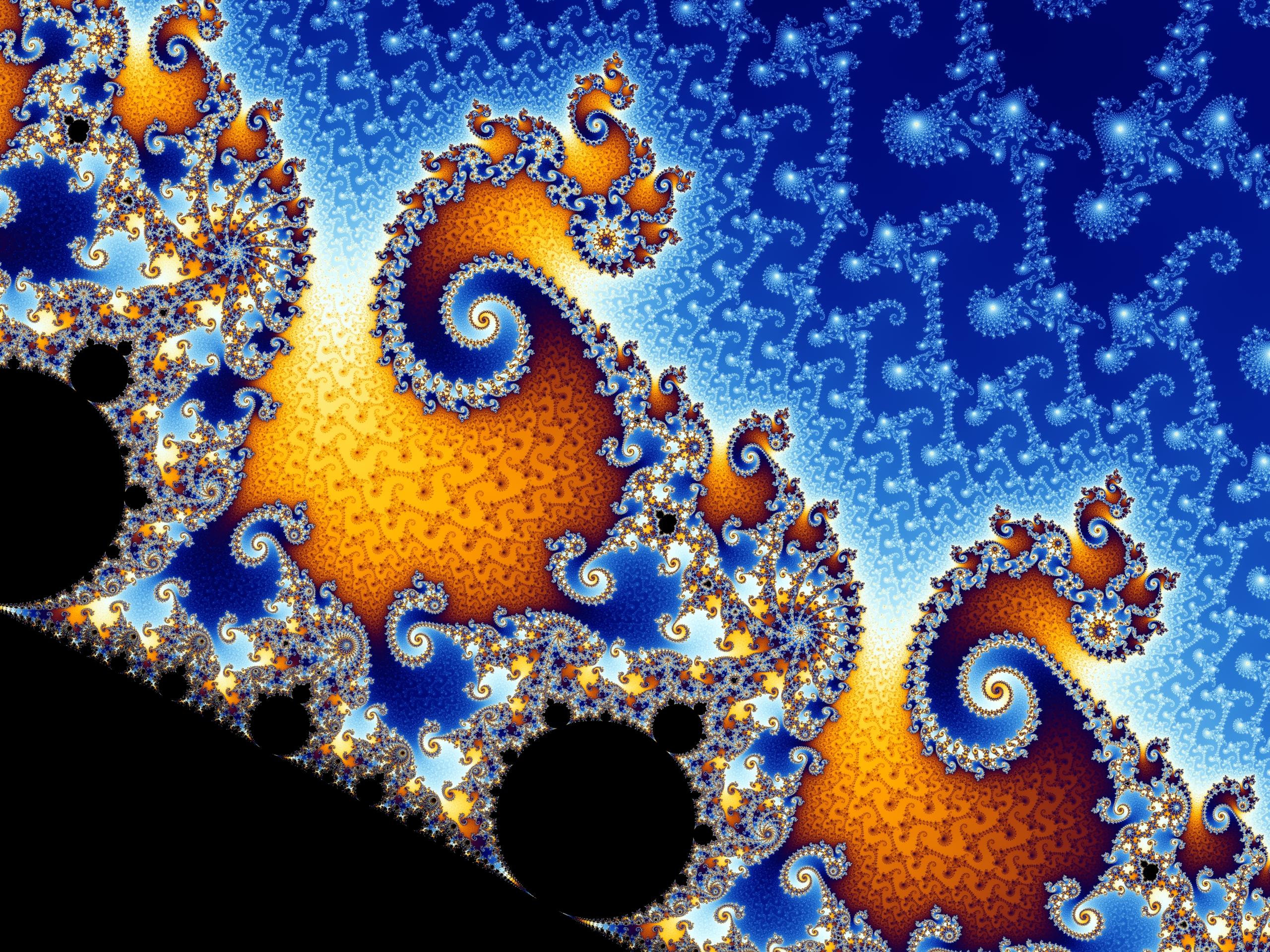
As promised (see my post on fractals), today I will write about the Golden Ratio.

 Leonardo Fibonacci, an Italian born in around the year 1170, discovered a fascinating sequence of numbers, which now bears his name. He 'discovered' - rather than invented - the Fibonacci sequence in Morocco, where his father traded with Arab traders.
A slight digression, 'Fibonacci' is not his real name but a portmanteau word: "bonacci" means a good, simple person, or a simpleton. "Fi" comes from filius, latin for 'son'; hence Fibonacci means "son of a simpleton" (or more kindly, "son of a good man").
The Fibonacci sequence is found all over the place. But first, to explain what it is, a little maths is needed.
The numeric sequence begins: 1, 1, 2, 3, 5, 8, 13, 21, 34, 55, 89 . . . Full marks to anyone who can see the pattern. It is a great party trick, by the way, to appear to be able to memorise an apparently random series of digits - 1123581321345589 etc. You can see this is the same as the sequence above but without commas or spaces, the uninitiated would not realise this. But the memory trick is possible due to a simple rule: start with the number 1, add it to the preceding number to make the next number, take that and repeat. Zero comes before 1, so the second number is also 1. Then, 1+1=2, 1+2=3, 2+3=5, and so on ad infinitum (as Jonathan Swift put it regarding fleas).

The mathematics can get pretty heavy...
The Fibonacci numbers are more than just a party trick. Much more. If each number is divided by the next number (bear with me here), the set of results will converge on a constant value. Like so: 1, 0.5, 0.666..., 0.6, 0.615 (approximately), 0.619, 0.6176, 0.618181818..., 0.617977528, . . . To cut to the chase, the final value (again, approximately) is: 0.6180339887.

Now to address its relevance, this number, known as the Golden Ratio, is very important in nature. Converted to an angle (as a proportion of one - =360 degrees - full turn), it equals 137.507764 degrees. It turns (get it?) out that plants often use this angle to arrange leaves around the stem. This just happens to minimise the shading of leaves lower down the stem by leaves higher up so each leaf gets as much sunlight as possible (more than with other arrangements anyway).
Visually, the series typically appears as a spiral. Here’s an aloe plant (courtesy of Genista’s photostream):
Aloe:

Broccoli:
What you notice especially with this broccoli are spirals in both directions - clockwise and anti-clockwise. Usually, the number of spirals in each direction will not be the same; typically in many plants you can count 8 spiral arms in one direction and 5 in the other - 5 and 8 are Fibonacci numbers. Coincidence, not. The broccoli is not just trying to look pretty, however. Each point is a little flower, or floret. This arrangement, determined by the Golden Ratio, allows the greatest number of florets to be packed into the whole flower head. Sunflowers, more famously, use the same principal.

The image below illustrates the classic problem Fibonacci himself used. Taking an idealised situation, a new-born pair of rabbits, one male and one female, mate at the age of one month and so on the 2nd month produce another pair of rabbits. Suppose that these rabbits never die and the females always produces one new pair every month from the second month onwards.
then the number of pairs of rabbits in the field at the start of each month is 1, 1, 2, 3, 5, 8, 13, 21, 34, ...

This and the broccoli come from a website all about Fibonacci numbers. Of the sites I have seen so far, this is the most comprehensive.
On Youtube there are several videos worth watching:
Number sequences
This video is on odd number sequence and square sequence. Fibonacci wrote a book on these numbers in the year 1225. Incidentally, the Arabs who introduced him to the whole topic of what we call now Fibonacci numbers, learnt about it in turn from Indian scholars who discovered it through poetry, of all things. So never write off any field of knowledge as "useless", right?
Not even history. As a further historical aside, Fibonacci's greatest impact was to introduce Arabic numerals to Europe (including that non-number, zero - ṣifr in Arabic, syber , sūnya in Sanskrit) . Before then, Europeans used Roman numerals, as in: I II III IV V VI VII IX X (that's counting one to ten). This made doing sums horrendously difficult but zero or '0' meant it was not necessary to invent a new symbol for every power of ten: I X C M became 1 10 100 1000.
But I digress.
This Youtube video is on the Fibonacci numbers, 1, 1, 2, 5, 8, 13, 21....
Leonardo Fibonacci in the year 1225 explained everything in sentences and paragraphs. The reason is because at that time the equal sign (=) was not invented yet!
More videos from Youtube:
Maths inc in economics, sciences and Fibonacci in 3 parts
This video is on maths and Fibonacci numbers in all kind of natural occurrences and living things, even the structure of the galaxies and sea shells.
Golden Rectangle
This video is on the intriguing golden rectangle which gives rise to the golden curve or spiral found in many natural structures around us.
Continued fraction that tend towards Phi or 1.618, the golden ratio.
More ways of arriving at Phi, or the golden ratio, 1.6180339887 (which is simply the inverse of 0.6180339887).
Cheers
Have a nice day.
foot note:
So, naturalists observe, a flea
Has smaller fleas that on him prey;
And these have smaller still to bite ’em;
And so proceed ad infinitum.
- Jonathan Swift
Go back




 Posts
Posts

