Sunday, March 15, 2009

Can you imagine a world without honeybees?

'Deadly Bees' movie poster altered to 'Dying Bees'
Hi,

I have been reading about a phenomenon called "hive collapse" or "Colony Collapse Disorder" (CCD) for a couple of years now.

commercial bee hive prepared for postageIt seems that there are fewer and fewer honeybees available for pollinating the fruit orchards in Europe and North America. Honeybees are grown in portable hives and they are rented out to farmers who grow fruit trees. The honeybees are delivered to the orchards and left there during the flowering season. the bees fly out and do their job which is to collect pollen grains and nectar from the flowers. they return back to the hives and spit out some of their saliva and mix the collected pollen grains and nectar to mix a potent concoction which we call honey.

But the size of bee hives began to decline mysteriously. Fewer bees would return to the hive than would leave to forage until there were too few left to sustain the hive. And so they would 'collapse', i.e. the bees abandon the hive (few dead bees are found near their hive).

Why are we so alarmed when the number of bees decline?
Bees are one of the major pollinators of flowering plants. They are important commercially for their power in pollinating crops. Without pollination, many of our crops will not set fruit. Their flowers would just wither and drop off.

Which types of plants need honeybees to pollinate them?
Honey bee at flower
All flowers that are colourful and scented. These flowers open in the daytime and attract they honeybees with their scent and showy petals. These flowers also have special arrangement of features which will be ensure that the anther will brush against the body of the bee as it lands and enters the base of the flower to collect the nectar from the nectaries. Some flowers won't even release their pollen until the bees buzz or vibrate their bodies against the anthers.

Queen of the Night or Keng Huay
Some flowers bloom at night, so depend on other creatures to pollinate them, like bats. These flowers a usually white and rely on being heavily scented to attract pollinators. One common example is 'Queen of the Night' or keng huay (right).


Which farmers need not worry if all bees disappear from the earth?

wheat flowerrice flower
A wheat flowerA rice flower
Cereal and grain growers have nothing to worry about. this is because their plants are pollinated by the wind. their plants have dull, yellowish green flowers which are non-showy and they do not produce nectar and scent.(no need to attract insects to visit their flowers). Such pollen grains are smaller, smooth and round and may have wings or air sacs to aid wind dispersal. Bee pollenated flowers produce heavy, sticky and protein-rich pollen to reward the bees for taking the pollen to other flowers.


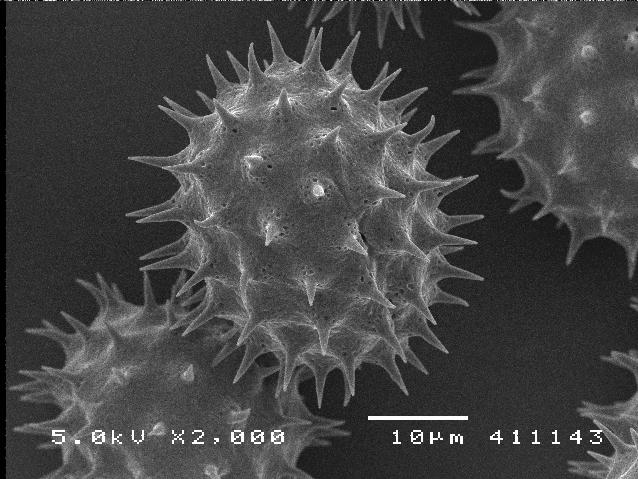
grass pollen electron micrographsunflower pollen electron micrograph
Smooth, round grains of grass pollenThe highly sculpted (spiky) grains of a bee-pollenated sunflower. Note: the sunflower pollen grain is about twice the size of the grass pollen


What is the latest news on CCD?
Nobody really knows what causes hives to collapse, and it could be several things combined. One theory is that it is caused by a parasitic mite. It could also be a virus, a fungus from Asia, pesticides, the transport of the hives, GM (Genetically Modified) crops and even radiation from mobile phones!

Recently, some new evidence has emerged due to the current world-wide economic recession. Along with many other commodities, the market for Californian almonds has collapsed, but their bee pollinators have not! There is actually a glut of hives, forcing scientists to ask if CCD really is a problem.

It is now suggested that CCD is caused by a combination of all the bee diseases with the last straw being: poor nutrition. Yes, bees that bring us delicious and nutritious honey may be malnourished. The problem is that domestic honey bees are set to forage among monocultural crops lacking in vitamins and minerals needed by the bees, while their wild cousins get a varied diet of many different flowering plants. So their immune systems become compromised and they are susceptible to disease. Hence CCD.

Since not so many bees are needed in the almond groves and apple orchards, the hives stay at home and get to forage promiscuously — and do not collapse so readily.
wildflower honey
It is no surprise, then, that wildflower honey is considered healthier than normal honey.

This potential answer to the puzzle does not mean we have nothing to worry about. But it does offer food for thought about how we produce our food and the benefits of a varied diet - for bees and for us.

Wednesday, January 28, 2009

There may be no bananas in 20 or 30 years?


bananas in pajamas
Say 'goodnight'. — or 'goodbye'?

Hi,

I was alarmed to learn recently that there may be no more cultivated bananas for us in 20 or 30 years!

Scientists are always coming up with such alarms. But lets look at what they are saying before dismissing them.

Wild bananas can be found in our forests! They are unpalatable and puny. They contain more seeds than the pulp that we eat. (The pulp is the placenta to which the seeds are attached.)

Due to man discovering a seedless mutant in his forages thousands of years ago, he has been using the same plant to propagate seedless banana trees using the vegetative (asexual) reproductive method.

As all of you know, sexual method of reproduction is far more superior than asexual. It confers the offspring genetic variation. This means that the offspring are all different from their 2 parents and their siblings.(due to meiosis cell division during sex cell formation).

Being genetically different at every generation gives protection against pathogens. When new germs attack the plant, some of the offspring may contain enough genetic difference to be able to survive the onslaught to be able to live long enough to pass on their genes to the next generation (aka reproduction).

But why did the farmers domesticate the seedless variety over the seeded ones?
It is so much easier to grow banana plants from suckers. It takes a shorter time for the plant to grow and bear fruit. He is assured of the quality, i.e. the bananas produced by the offspring will be 100% carbon copies in terms of taste, colour, shape, size and angle of curvature etc. Being able to predict these parameters is useful if you are growing bananas for a living.


domesticated banana plantdomestic banana flower
A flowering domesticated banana plantThe banana flower head beginning to open
domestic banana flowers
The flowers and immature banana fruit within the bracts of the flower head


Compare these images of a domestic banana with its wild cousin below. What differences strike you?


wild banana flowerwild banana flower
The wild banana plant with the flower head beginning to emerge
wild banana flowerwild banana flower
Notice the bright scarlet colour of the bracts or sheaths covering the flowers proper. What colour is the domestic one?
wild banana flowerwild banana flower
Compare this yellow, showy flower with the insipid, almost colourless domestic banana flower. This is a plant that wants to reproduce
wild banana flowerwild banana flower
Alas, this wild banana is not in the forest and the natural pollinator seems to be absent, the ant in picture not withstanding
wild banana flower


Due to the over-reliance of commercial growers on one sterile variety, a disease is sweeping the banana producing countries that is devastating crops.
You can read the article forecasting the demise of the banana to get further details here: 'Why bananas are a parable for our times'.

It is not likely that we will lose the bananas in our forests (so long as there are forests...) but it would take a long time to cultivate new edible varieties. Cultivation from suckers is ok so long as we maintain some diversity. Otherwise we risk slipping very badly on a banana skin.

Cheers

Below, a plantain squirrel feeds on an ornamental banana flower
plantain squirrel feeding on banana flower

Sunday, December 28, 2008

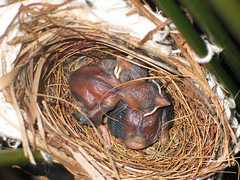
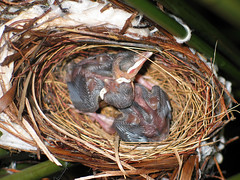
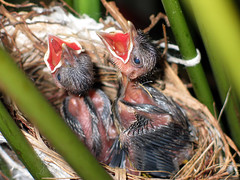
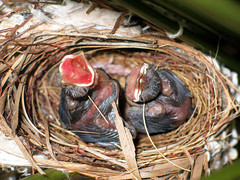
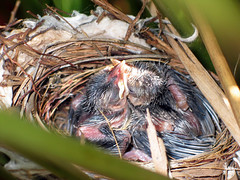
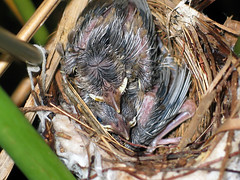
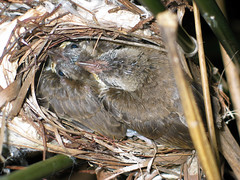
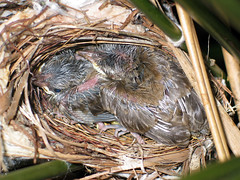
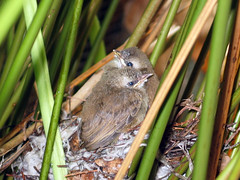
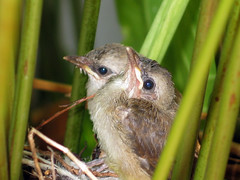
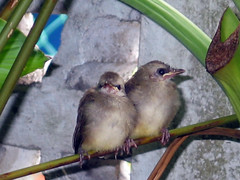
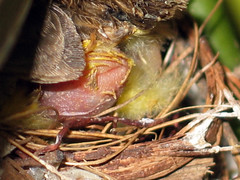
Photos of Bulbul chicks from eggs to fledglings

bulbul nest and eggs
A pair of yellow-vented bulbul's eggs

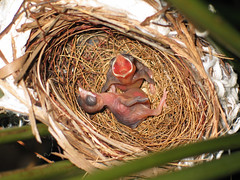
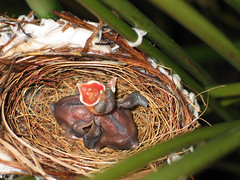
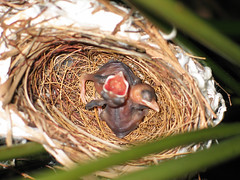
bulbul chicks
Day one-bellies full of yolk. Subsequent photos taken on successive days. Just follow the arrows.
bulbul chicks
Day 3 — The white is cotton wool used by the parent as lashing to tie the nest to the plant stems
bulbul chicks
Day 2

bulbul chicks
Day 4
bulbul chicks
Day 5
bulbul chicks
Day 7. Eyes open.
bulbul chicks
Day six

Day 8
bulbul chicks
Day 9
bulbul fledglings
11th — Suddenly, ugly ducklings no more
bulbul chicks
10th day
bulbul fledglings
Day 12
bulbul fledglings
Day thirteen

bulbul fledglings
Last sighting - the Norwegian Wood moment (This Bird Has Flown...). After two weeks (does this agree with scientific observation?)


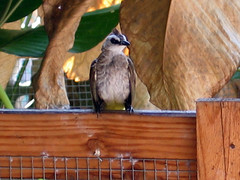
yellow-vented bulbul
Why they are called "yellow-vented". The vent is the area around the cloaca, which is the single, combined opening birds have for excretion.
bulbul adult
A parent bird — can't tell if it is the male or the female — both share the parenting and both have a crest.


Hi,

We had a yellow-vented bulbul (Pycnonotus goiavier) family nesting in our garden some time ago and we feel particularly privileged to have had captured the magic moments in camera. The photos of the 2 bulbul chicks was captured by my husband, helped by the whole family.


FACT SHEET:
Mangrove and wetland wildlife at
Sungei Buloh Nature Park
Main features: Small (20cm); slight crest; white face; yellow under tail coverts.
Adult: Olive brown crown, nape, underparts; white side of head, eyebrow, throat, belly; lores black; breast whitish streaked brown; black bill, feet, eyes. No white on tail.
Genders look alike.
Juvenile: Sides of head brownish; throat greyish.
Call: Described as a pleasing liquid bubbling chatter; loud harsh alarm call chweit-chweit.
Status in Singapore: Very common resident throughout the island and North and South offshore islands.
World distribution: South-east Asia from Myanmar to the Philippines and Java. Not found in Australia.
Classification: Family Pycnonotidae. World 137 species, Singapore 10 species (1 introduced).
I cannot believe that so much mass was contained inside the tiny egg. It is as if the chicks sucked in air and increased in volume as soon as they emerged from the shell. Maybe it is exactly so as birds have lungs too.

(On another note: I have witnessed crocodiles and snakes hatching and have been awe-struck with the same phenomenons at the sizes of the hatchlings. Note that babies that emerge from eggs always have a tumour-like attachment at the belly button area. This is the left-over yolk (in yolk-sac) to tide them over until they are able to get food from their parents or hunt on their own.)

It was so exciting to see the parents caring for their young with utmost care. They were very busy flying back and forth everyday, rain or sun, and doing it so quietly so as not to attract the attention of potential predators.
Mynas and crows are always around and they seem to be threatening the chicks all the time. Of course the cat and shrew are also around.

There was once when we approached the nest and the mother bird turned into a "drama mamma", flopping around on the ground and making much noise to attract our attention away from her chicks. She was actually pretending to have broken her wing(s) and unable to fly. Once we moved a respectable distance away from the nest, she suddenly flew away!

I have only read of such pretensions but to see it in our own garden is unforgettable.

We were very worried the day the chicks did fly off. It was drizzling that morning and we were straining to see the fledglings. The parents were cajoling their young to fly. (A fledgling is a young bird that has just grown the feathers needed to fly and is capable of surviving outside the nest.)

They flew in short flights into our neighbour's garden. We were not sure if the chicks were strong enough to fly to safer places than the low fence, or small bush in our neighbour's garden. As I said earlier, there were plenty of alert cats on the ground and aggressive crows and mynas in the trees. They have to out-fly all these hazards. If I am not mistaken, the parents were making a lot of noise to attract attention away from the tentative flight of the chicks. Their strategy seem to have worked very well as we were very confused and could not follow the path of the fledglings.

Q: The chicks were well camouflaged when their parents were out hunting/gathering food. When the parents appeared, they opened their huge beaks and the inside of the mouths and throats looked a bright red. Why?

A: The colour and shape of the mouth is supposed to evoke a strong response in the parents to feed their baby.

Also note that their red mouths are prominent in our photos because the chicks being blind at first would react to any slight movement if we were careful not to make it too violent.


Wishing everyone a happy New Year and all the best for 2009. And as wishes are fishes, here's one for you... <0))))))><

Cheers

Saturday, December 27, 2008

Lesson 5: Why are there more colour blind boys than girls?

Chew Chor Meng muscular dystrophy
MediaCorp actor Chew Chor Meng, known for his role in the hit sitcom "Don't worry be happy", has been diagnosed with muscular dystrophy. Straits Times Dec 21 2008
Hi,

Recently there have been a number of newspaper articles on people suffering from Muscular Dystrophy.

When I read about these people, I keep on thinking about colour blindness and haemophilia. These are also congenital (= people born with the trait) diseases). They are due to a mutation in their chromosomes. Their mutations occur on the X-chromosome and so these diseases are called sex-linked diseases.

Sex-linked diseases are more common in the male than in the female. The mother is called a "carrier" as she does not suffer from the disease but passes on the mutated genes to her sons. (If a girl gets the trait, then her father must show the condition and her mother must be a carrier.)

We will now find out the pattern of this unfortunate inheritance.

Colour blindness
X-linked recessive inheritance
This genetic sex-linked disease comes in many forms. The most common is red-green colour blindness.

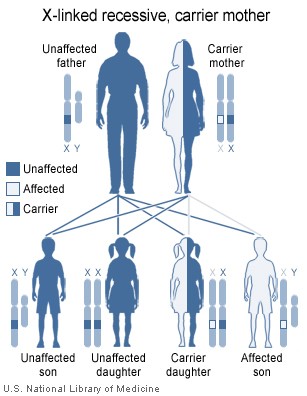
In this genetic diagram it can be seen that all the daughters do not show the condition. But half the boys (50% of the total number of boys) in the same family will show/suffer from the sex-linked trait.


dichromatic apples colour blindness
The colours of the apples in the top row are seen by people with normal colour vision; the bottom by a person who is colour-blind.


Now, here is a quick check for colour-blindness. It is not 100% conclusive.
When white light enters our eyes, it stimulates the nerve cells in the retina. There are many types of cone cells. Each type of cone cell is stimulated by a specific wavelength (=colour of light). If certain cone cells are defective or missing, it results in colour-blindness. For example, if the green sensitive cone cell is not stimulated, then the person does not see green light.


Haemophilia
This genetic sex-linked disease used to result in many fatalities in early history. The children did not live long as they bleed to profusely when they get wounded or cut. They lack certain blood proteins/factors which make it difficult for platelets to stick together, to stop bleeding. Platelets are small colourless cells found in the blood.

A slide show giving a basic explanation of haemophilia, the different types and treatment


It is believed by many historians that haemophilia played a role in precipitating the Russian Revolution in 1917. The son and heir of the last Tsar of Russia had haemophilia. The gene was passed to him by his mother ultimately from his great-grandmother, Queen Victoria of England. The royal families of Europe tended to inter-marry and haemophilia was known as the 'royal disease'.

Muscular dystrophy
In this genetic sex-linked disease, the person slowly loses strength in their muscles.

Symptoms include muscular tremors, cramps, progressing to weakness and wasting in the legs, trunk, arms, shoulders, neck and face. This affects one's walking, speech and swallowing. The disease affects the nervous system that controls the voluntary muscle movements. In advanced stages, the person will be wheelchair-bound, and unable to smile or express his emotions.


This Youtube video shows a young man of 23 years explaining how a mutation on the X-chromosome lead to a lack of a certain protein(dystrophin). This results in his muscle cells turning into connective tissue or fat tissue.

dystrophin protein molecule muscular dystrophy
Dystrophin, a protein molecule that is important in voluntary muscular contractions
Q: Can sex-linked diseases be cured?
A: No.
All the cells in the body contain the defective X-chromosome. However, people can control the extent to which the condition affects their quality of life. Drugs can be used to control the disease. Regular physiotherapy can alleviate the condition.
In the case of haemophilia, regular transfusion of blood from the blood bank could allow the individual to lead a fairly normal life.

Q: Can sex-linked diseases be avoided?
A: Yes.
Genetic counselling at the hospitals can be sought. If a sex-linked condition has been identified in any family member of the two people wanting to marry, then the couple could work out the chance of giving birth to a child with the condition. The medical workers' advice would be useful to the prospective parents-to-be.

Marriage amongst blood relatives increases the chance of such genetic diseases. These are called consanguineous marriages (marriages where the couple are close blood relatives, e.g. first or second cousins, uncles-nieces, brother-sister). The last is incest, which is punishable by law as this type of pairing will result in their children having many other non-sex linked and even more serious genetic conditions. Repeated consanguineous marriages over several generations, as happened in European royalty, means many more carriers and sufferers are found certain isolated communities or social groups and extended families.

I am feeling sick writing on all these morbid details of incurable genetic diseases.

Signing off.

Friday, December 26, 2008

Shocked, dazzled, delighted and learnt to assume nothing but question everything

Steven Levitt Stephen Dubner


Hi,

Freakonomics (Amazon link)I have just finished reading an amazing book.It is "Freakonomics" by Steven Levitt and Stephen Dubner, first published in 2005. You may want to browse the book at Amazon.com by clicking on the link at right.

Do you have the answers to the following observations and questions?

Q: A snake bites your friend, he screams with pain and he dies. You concluded that the snakebite killed him. Is your answer correct or wrong?

Q: What do estate agents and Ku Klux Klan have in common?

Q: Why do drug dealers live with their mothers (in the USA)?

Q: How can your name affect how well you do in life?

Q: What do schoolteachers and sumo wrestlers have in common?

Q: Why did violent crime rate fall suddenly in America from early 1990s and the reverse happened in Romania from 1966 to 1989

Q: What makes a perfect parent?

Q: Why is giving a small stipend for donating blood rather than being praised for their altruism, tend to make fewer people donate less blood?

My favourite quote: "Sunlight is said to be the best of disinfectants", by Supreme Court Justice Louis Brandeis. The context is dissemination of information dilutes its power.

In the late 1990s the price of term life insurance fell dramatically (by 1/3?). It was a mystery as there was no obvious cause.....Information is the currency of the internet. The internet is efficient at shifting scattered information from the hands of those who have it into the hands of those who do not. "..the internet acts like a gigantic horseshoe magnet waved over an endless sea of haystacks, plucking the needle out of each one.."

People were able to easily compare the prices of each company offering the insurance and they went for the cheaper offers. This produced competition for consumers and hence the price drop.

The internet has accomplished what no consumer advocate could: it has vastly shrunk the gap between the experts and the public.

Question:
Why parents would allow their young children play with friends who live in houses with swimming pools but not those whose parents keep guns at home?

Answer:
Risk = hazard + outrage (Peter Sandman)
When hazard is high and outrage is low, people under-react, and when hazard is low and outrage is high, they over-react.

This part is of particular relevance to parents and educators:
Some factors that affect school performance was investigate and can you guess which ones matter and which do not matter (= there is no effect on the child's performance in school)?

  1. The child has highly educated parents

  2. The child's family is intact (parents are not divorced, child lives with both parents)

  3. The child's parents have high socio-economic status

  4. The child's parents recently moved into a better neighbourhood

  5. The child's mother was thirty or older at the time of their first child's birth

  6. The child's mother didn't work between birth and kindergarten (mother is housewife)

  7. The child had low birth weight

  8. The child's parents speak English in the home

  9. The child's parents regularly take him to museums

  10. The child is adopted

  11. The child is regularly spanked

  12. The child's parents are involved in the Parent Teacher Meetings

  13. The child frequently watches television

  14. The child has many books in his home

  15. The child's parents read to him nearly everyday


Answer:
Strongly correlated with the performance: A, C, E, G (negatively), H, J (negatively), L and N.

Not related to performance level: B, D, F, I, K, M and O.

Do want to know the explanations for all these intriguing measurable observations?
Visit the school library or the National Library and borrow this book of about 200 pages and find our for yourself.

What I conclude from reading this book: Learn to assume nothing and question everything.

And always remember: correlation does not necessarily mean causation. You may find yourself asking a lot of questions.

BTW, don't blame your parents for everything that does not go right in your lives.

Cheers

Thursday, December 25, 2008

Lesson 4: Why did the man who got a successful face transplant last year die?

face transplant face transplantface transplant

Hi,

I was reading about the Chinese farmer Li Guoxing (above) who died last week after a successful face transplant carried out last year.

Q: Why did he die after so many months of successful transplant?
A: He did not continue to take the prescribed anti-tissue rejection drugs.

Q: What is tissue rejection?
A: When we transplant a tissue or organ from one person to another, if they are not identical twins, the cells of the donated tissue will be attacked by the recipient's immune system and die cell by cell. Our immune system consists of the white blood cells and their arsenal of antibodies. The immune system is analogous to the defence system of Singapore. The police, army, navy and air force together with the civil defence do a pretty good job of defending our country from being invaded by enemies and other hostile elements.

type of blood cellsIn the same way there are several types of white blood cells and their secretions to defend our body against foreign invaders in our body.

Phagocytes move about amongst the tissue cells in a amoeba-like fashion. They travel in the blood stream and squeeze out of the capillaries to reach the tissues. They are able to engulf and "swallow" the foreign invaders. Then digestive enzymes kill and destroy the pathogen and other foreign invaders.


This video shows a phagocyte 'in hot pursuit' of a germ, which it catches eventually (phagocytosis) — "book him Danno!"
B-Lymphocytes, another type of WBC, produces antibodies. These are chemical molecules that attach themselves to pathogens and act as "markers" or "tag" for the phagocytes to come forward to swallow and destroy the pathogens. This process is called phagocytosis.

Another function of antibodies is to cause the pathogens to stick together or "clump" and thus immobilise them. This allows time for the phagocytes to rush to the site of infections to destroy the invaders.


A third function of antibodies is to neutralise the toxins produced by pathogens. These toxins (produced by the pathogens) affect chemical processes in our cells.


LeucocytesThere are different types of leucocytes, or white blood cells. We are most familiar with neutrophils as the main constituent of pus


As you can see, the immune response is very good at keeping germs and other invaders of the body from harming us. However, in organ or tissue transplants, the WBCs do not know that these transplanted cells are not invaders. Hence transplant recipients have to take drugs to stop the WBCs from doing the job they are supposed to do. These 'Immuno-suppressant' drugs suppress the immune response of the body. They have to be taken for the rest of the patient's life. If the drugs are stopped, then his WBCs will start killing the cells of the transplanted organ.
This must have happened to the poor farmer in China because he stopped taking his Immuno-suppressant drugs.

A big problem with taking Immuno-suppressant drugs over a long period of time is that it increases one's risk of infection by all manner of microorganisms because one's Immune system would be rendered incapable of fighting infections like it routinely does in a healthy person.

Taking immuno-suppressants over a long period of time also increase a person's cancer risk. Anyone who is considering a face transplant, or any other organ transplants from persons whose tissues are not genetically identical to you would have to decide whether the benefits outweighed the risks.

red blood cells
Red blood cells with bits of fibrin, aka erythrocytes. The fibrin is a clotting agent


Q: Why is it important to receive the "right" type of blood from the blood bank?
A: Blood is a tissue, a liquid tissue. Our immune system will destroy the invaders (donor's blood cells) if they are not genetically closely matched with our cells. At the same time, the WBCs and antibodies in the donor's plasma will attack our body cells.

In blood transfusion, it is important to match the blood type from the donor with that of the recipient. This is of utmost importance. If the "wrong" blood group blood is transfused, the red blood cells will be clumped together to form lumps, and then burst.

The surface of red blood cells contain a type of protein called antigens (called A and B).
Blood is arranged by these antigens into blood types A, B, AB (contains both antigens), and O (contains neither antigen). The liquid part of blood (plasma) has antibodies against the opposite antigen. A person with Type A blood, for example, has antibodies against the B antigen.

So if blood of an unacceptable blood group is transfused, the immune system attacks the donated blood cells, causing them to burst. This may cause serious symptoms, including kidney failure and shock. Antigens also occur in other parts of blood, including white blood cells, a type of blood cell called platelets, and plasma proteins.

Donated blood is put into ABO and Rh groups (another type of blood grouping) to reduce the risk of transfusion reaction.

Before a transfusion, patient and donor blood is often tested (cross-matched) to see if it is compatible. A small amount of donor blood is mixed with a small amount of patient blood. The mixture is checked under a microscope for signs of antibody reaction. It is safe to proceed with the transfusion only if no antibody reaction takes place.

Cheers